
Anti-AI Slop: The Meaning of Human Thought
Between marketing illusions, intellectual passivity, and automated code: a developer's reflection on our relationship with technology.
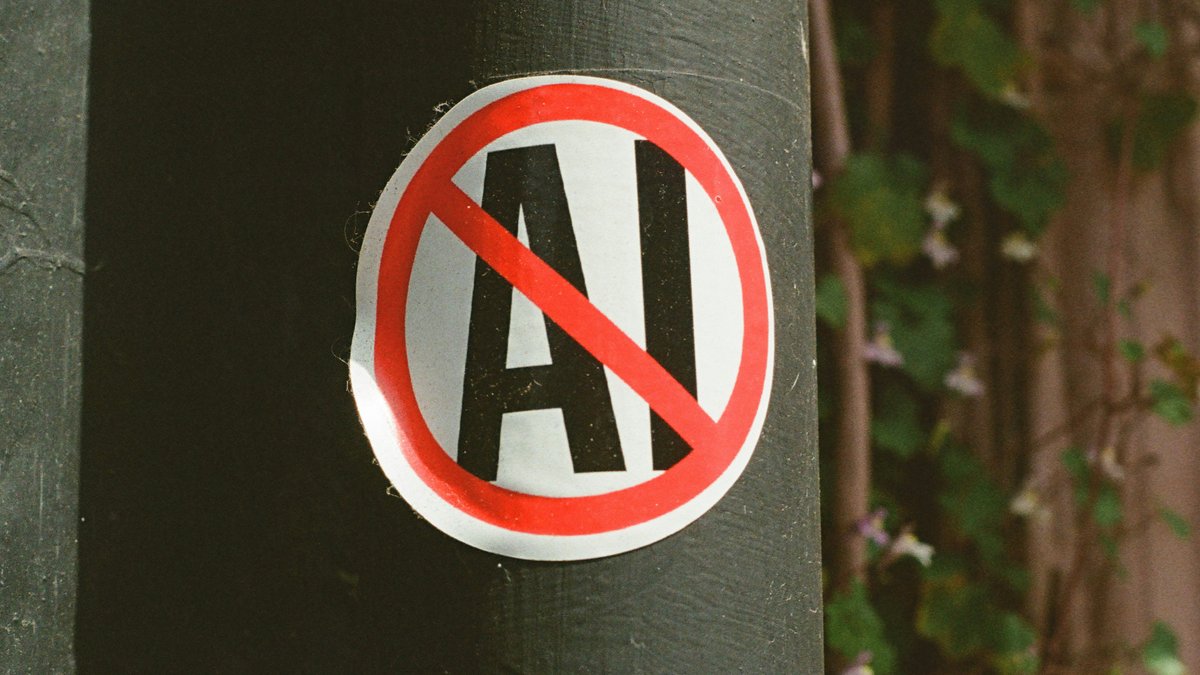
Let's be completely candid for a moment: the true tragedy with the explosion of current AI isn't that it's getting too smart, it's the risk of making us profoundly dumb. We think less, we research less, and we outsource the slightest spark of thought. Back in the day, I took immense pleasure in architecting an algorithm from scratch, racking my brain for hours to optimize performance, digging through raw documentation, and exchanging ideas with fellow human enthusiasts on developer forums. We genuinely learned.
Today, AI knows everything instantly. Consequently, we no longer search, we no longer speak to one another, and we sit isolated in front of a prompt terminal. The observation is just as striking among students turning in entire assignments generated by chatbots without understanding a single line: what have they learned? Nothing. It is the active atrophy of curiosity and intellectual effort. We are drifting straight into Idiocracy.
Added to this is a marketing shift orchestrated by tech corporations. Driven by aggressive advertising, the boundary between a basic deterministic algorithm and genuine artificial intelligence has been completely erased. Everything is now labeled "AI": a basic pocket calculator is "AI", an NPC scripted with simple if/else statements in a 1990s video game is "AI", and we even find washing machines boasting an "AI mode" that simply weighs the drum to adjust water levels (a basic mechanical scale and rule-of-three calculation that appliances handled perfectly twenty years ago!).
Legally, this isn't even considered false advertising because "AI" has become a catch-all buzzword for any piece of code. Tech marketers prefer dumbing down terminology under the excuse that "people don't need to know the technical details", rather than actually educating users. It is regrettable and misleading: oversimplifying reality at the expense of genuine technical understanding.
Then comes the paradox of the tool: as a developer, I use it daily to orchestrate workflows, prototype features, and save precious time. But here is the crucial distinction: the tool itself is not the problem, the passivity of the user is. In the hands of a seasoned engineer who understands system architecture, enforces security, and uses the model to actively challenge technical choices, AI doesn't make you dumb: it magnifies impact and productivity. Conversely, in the hands of passive users who copy-paste outputs without comprehension, it only breeds an illusion of competence.
In the tech sector, the hangover has already arrived: companies that bet everything on prompt-generated code are drowning in unmaintainable technical debt riddled with vulnerabilities. The result? Experienced freelance developers are now charging premium emergency rates to untangle and rewrite this unstable code produced without discernment. Real engineers are far from obsolete: amid an ocean of machine slop, authentic human craftsmanship has never been more indispensable.
The real danger of AI has never been the algorithm itself: the danger comes from human intent. In malicious hands, AI becomes a formidable offensive weapon: state-sponsored cyberwarfare, advanced industrial espionage, targeted attacks against hospitals or nuclear power plants, up to the assisted design of digital or chemical viruses to strike critical infrastructures. That is where the true peril lies.
On top of that lies the fundamental problem of alignment, illustrated by the famous paperclip maximizer thought experiment explained by Ego, where an AI destroys everything to blindly optimize a naive objective.
As for shutting down the internet or the power grid to neutralize an out-of-control threat, reality is far more complex: the global economic fallout would be catastrophic, yet for survival, humanity might be forced into it if a self-replicating malware paralyzed every machine. Yet let us not forget the physical reality: a model that powerful requires colossal physical infrastructures and massive energy. Without electricity, it is completely over.
What we should fear is not the machine itself, but malicious human hands and our blind dependence. Let's safeguard our critical thinking and human curiosity.
Long live human intellect, and reject AI slop.